How to successfully digitize business processes
In this article, we will show you why you should digitize your business processes and how to do it successfully.


As the Bitkom study 2026 shows, the vast majority of companies in Germany agree: those who hesitate fall behind. Digitizing business processes offers companies significant advantages and ensures they are well-prepared for future challenges. From substantial time and cost savings to increased flexibility and competitive advantages – process digitization brings a multitude of benefits. But how can your company successfully achieve digitization? In this article, we’ll show you why you should digitize your business processes and how to do it effectively.
Why you should digitize your processes
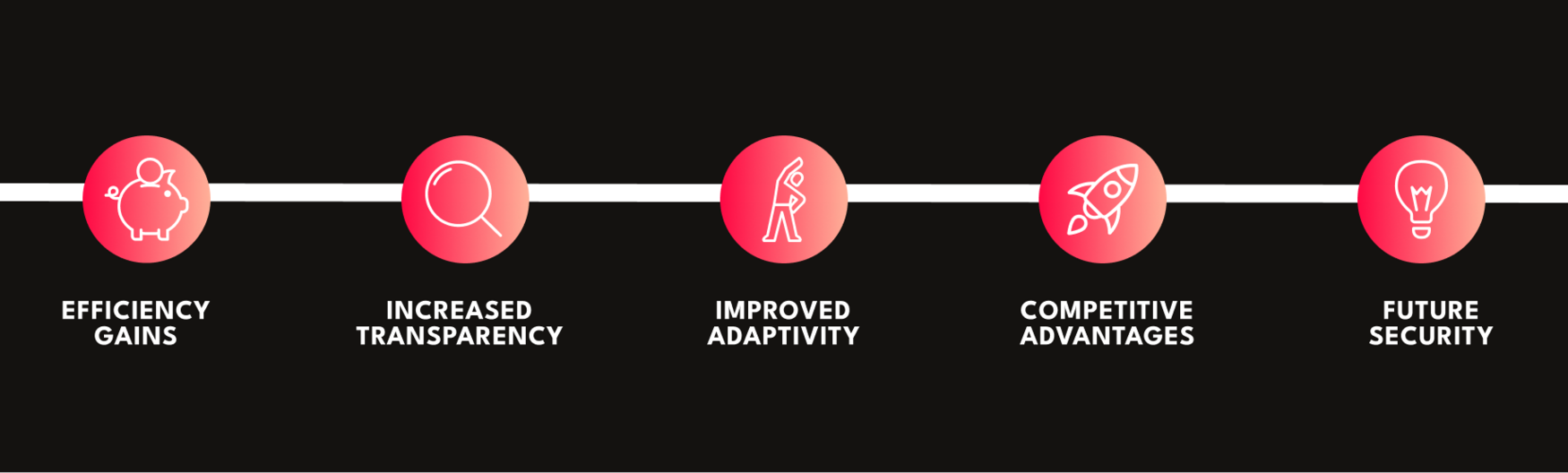
Efficiency gains
The digitization of business processes can lead to a significant increase in the speed of individual work steps and overall, allowing goals to be achieved more quickly and costs to be reduced. Repetitive tasks can be completed quickly and without errors, which increases the quality of results. The result: increased efficiency in your processes in terms of costs, time and quality.
Increased transparency
Process digitization can significantly increase transparency and traceability internally. Digital information can be searched and analyzed more easily, which makes it easier to identify optimization potential and provides valuable insights.
Improved adaptivity
Manual work processes and process gaps significantly limit the flexibility and agility of your company. Digitization eliminates these limitations by making data available in real time and everywhere through mobile applications. This optimizes decision-making, as relevant information can be accessed at any time and analyzed quickly. This enables companies to react more quickly to market changes and customer requirements, which significantly increases their flexibility and adaptability in a dynamic market environment.
Competitive advantages
By implementing innovative digital processes, you may secure a decisive competitive advantage. Companies that digitize their processes are better equipped to survive in a competitive environment because they use their resources more efficiently, react more quickly to changes and offer their customers an improved service.
Future security
The digitization of business processes not only provides stability in uncertain times, but also lays the foundation for the development of new business models and services. Through digital transformation, your company can create innovative products and services to strengthen its market position. In the long term, digitization promotes continuous adaptation and further development so that your company remains flexible and fit for the future.

Process optimization with AI
Digital processes also lay the foundation for the next step: using artificial intelligence. Where employees used to review documents, type up information or answer recurring inquiries, AI can now take over a large share of this routine work. It reads and structures documents such as supplier PDFs, creates first drafts and suggests answers based on verified solutions. This gives your team time for tasks that call for experience and judgement.
Our article on automated document analysis shows what this looks like in practice. We have collected further use cases from aerospace, communications consulting and biotechnology in our AI magazine.
Process digitization: your step-by-step guide
Step 1: Orientation
First, get a clear overview of all relevant processes in your company. This will enable you to make an informed decision about which processes should be digitized and to what extent this makes sense or is possible. The following questions can help you with this:
- What processes are there within my company?
- How are these processes recorded and documented in order to create a clear starting point for further development?
- Are there any inefficient or redundant steps?
- What is the digitization potential of the individual processes?
- Which areas of the company are involved in the various process steps?
Step 2: Strategic planning
In order to make targeted decisions, you should determine in advance what you want to achieve through digitization. Developing a strategy that involves all departments in your company makes collaboration much easier.
- Have clear goals and requirements already been defined that are to be achieved through the digitization of your business processes?
- Which processes should be digitized?
- What impact will the change have on the employees involved in the process?
- Are there any preliminary tests or is the implementation taking place without them?
- Is a comprehensive strategy in place that is communicated to all those involved?
Step 3: Technology choice
The technology you choose should meet all your requirements and should be future-proof. This raises crucial questions that will determine the long-term success of the digital transformation.
- Which technologies and tools are best suited to digitizing our processes?
- How flexible are the chosen technologies in order to respond to future changes and requirements?
- What support and maintenance strategies do we need for the new digital tools?
Step 4: Implementation
Careful implementation planning is necessary to integrate the new digital processes into existing infrastructures and workflows and to ensure that all components work together seamlessly.
- How can a detailed implementation plan be created for the rollout?
- How can it be ensured that the new digital processes are seamlessly integrated into existing systems?
- What requirements will the new technologies place on the IT infrastructure?
Step 5: Integration management
Involving employees in the digitization process is of major importance. It is therefore important to think about how you can increase the acceptance and use of new digital processes at an early stage. The following questions can help you with this.
- How can the goals and benefits of the change be communicated to employees?
- How will employees be trained to use the new digital tools and processes?
- How can employee feedback and co-determination be integrated into the change process?
Step 6: Monitoring and optimization
To ensure that the implemented processes deliver the desired results, companies must regularly monitor and adjust their performance. To make this monitoring efficient, the following questions can serve as a guide.
- How can the performance of digital processes be regularly monitored to ensure that they are achieving the desired results?
- How do we ensure that digital processes are continuously improved to meet changing requirements?
- How frequently should the performance of the digital processes be measured and reviewed?
- What indicators should be used to evaluate the effectiveness of the digital processes?