AI Invoice Verification for Jacobi + Klimasch
makandra developed an AI application for Jacobi + Klimasch Sachverständige that automatically captures line items from contractors’ quotes and invoices, even when they have been corrected by hand. Capturing a long invoice now takes five minutes at most instead of up to 30, while the professional assessment stays with the expert.
Jacobi + Klimasch Sachverständige from Achim near Bremen has been assessing damage to buildings, household contents, business contents and business interruption on behalf of insurance companies since 2010. Their daily work includes checking contractors’ quotes and invoices, mostly for major losses.
makandra developed an application that uses AI to automatically capture line items from quotes and invoices, even when the documents have been corrected by hand. A long invoice is now captured in five minutes at most, instead of up to 30 minutes as before.
Invoices captured in 5 minutes
Challenge
Line items from quotes and invoices have to be typed out of PDFs by hand before every review
Solution
Local AI model that reads line items automatically, including handwritten corrections
Industry
Technology
Services
We still do the professional assessment ourselves. But the application makes our work enormously easier because it takes many time-consuming steps off our hands. Working with makandra is going very well – we can rely on the team. Even after launch, we continued to develop the application together and improved it continuously.
Key Challenges
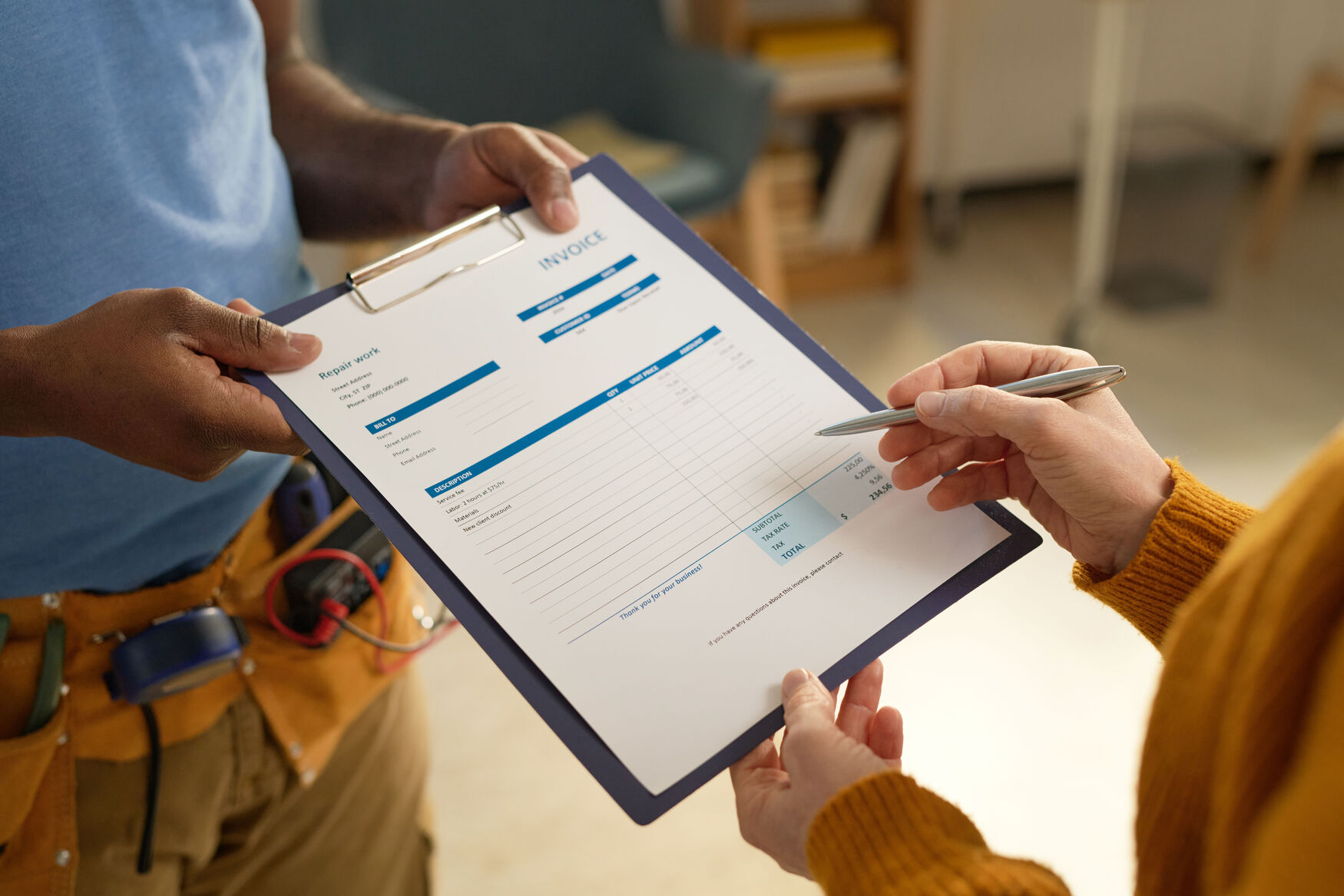
Before any approval, staff at Jacobi + Klimasch check quotes and invoices line by line and note their corrections directly in the document. To continue working with the figures, they previously had to transfer every line item from the PDF into an Excel spreadsheet by hand. The goal was a solution that takes over this upstream step without taking the actual assessment away from the experts.
- Typing before checking
The real time sink was not the professional assessment but the data entry. Every line item of a contractor’s invoice first had to be entered into a spreadsheet by hand before work could continue. - Documents in every conceivable format
Every trade business invoices in its own layout. A solution requiring a separate template for each supplier would likely take more effort to maintain than the task itself. - Subsequent corrections in the PDF
Reduced hours or changed prices are often noted by hand on a tablet directly in the document. That corrected version is then binding, not the original document. - Confidentiality as a hard requirement
Invoices from insurance claims allow conclusions to be drawn about policyholders and the affected properties. Processing had to take place locally, on controlled servers, not with some arbitrary provider on the internet.
Our Solution for Jacobi + Klimasch
We developed an AI-based application for Jacobi + Klimasch that automatically reads invoice line items from the document and prepares them for further processing.
- Line items are read, not typed
A multimodal language model captures all line items from the uploaded PDF, whether it is the original or an already reviewed version, and enters them into a form. No templates per contractor are needed. - Edited documents are understood, too
The model processes the document as an image and also recognizes handwritten additions made afterwards. A crossed-out amount with a handwritten replacement is adopted as the valid version. - Calculation errors stand out immediately
For every line item, the form checks whether quantity times unit price equals the stated total and highlights discrepancies directly in the view. - The assessment stays with the expert
Whether a line item matches the damage is still decided by a person. The application supports data capture and correction and delivers the result as an Excel export that documents the arithmetical check for the insurers. - Processing exclusively on controlled servers
Documents and the language model run on servers operated by makandra itself. The documents never leave this infrastructure.
Technical Implementation
The invoice check is part of the same Ruby on Rails application as the AI search, built with Rails 8.1, Ruby 3.4, Unpoly 3.12 and ViewComponents.
For analysis, the uploaded PDF is split into horizontal strips and passed as images to a multimodal language model, which reads the line items from them. For subsequent corrections, we rely on a feature that occurs consistently in practice: handwritten additions always have a different color than the printed text. A prompt describes to the model what such corrections look like, e.g. a crossed-out amount with a new value written next to it.